Our vision
To help organisations succeed through personal, ethical and practical HR and recruitment support built around their goals.

HR Consulting & Talent Acquisition · Since 2007
Strategic Talent Acquisition and HR Solutions Backed by 19+ Years of Industry Experience.

Our story
YOOTOHUNT CAREER SOURCE began in 2007 with a simple conviction: a hiring decision is a business decision. A job description lists skills, but the right appointment also depends on the team, the market, the pace of the business and where it is heading.
Since then we have worked with more than 150 clients and supported over 9,000 placements across manufacturing, logistics, chemicals, pharmaceuticals, technology and other sectors. That experience has shaped how we work: we take time to understand the organisation first, then search with that context in mind.
We measure our work by whether the people we place succeed in the roles, not just by whether the roles are filled.

For employers
YOOTOHUNT CAREER SOURCE helps organisations across India find the right people, from frontline teams to leadership, and supports them with staffing and payroll so hiring never holds the business back.
Our solutions
Choose a single service or combine them as your workforce grows.
How we work
A structured process, so you always know where your hiring stands.
We discuss the role, responsibilities, experience, skills, location and hiring expectations.
We identify relevant candidates through suitable sourcing channels and our recruitment network.
We evaluate candidate profiles against the agreed requirements and coordinate the interview process.
We coordinate with the client and shortlisted candidates through the selection and offer stages.
Our commitment
Industry experience
Each industry page lists the business segments and positions we recruit for.
Getting started
A complete brief helps us start the right search faster. Share what you can; we’ll discuss the rest with you.
Employer FAQs
It depends on the role, seniority and location. For most roles we aim to share a first shortlist soon after the brief is agreed, and we confirm expected timelines when we take on the requirement.
We recruit for employers across India, including metro cities, emerging business hubs and industrial regions.
Yes. We support hiring from entry and executive levels through to managers, senior managers and leadership roles.
Fees depend on the service, role and scope. We share and agree commercial terms with you before we start any search.
Yes. We handle client information with discretion, and confidential and replacement searches can be run without naming your company until you approve.
Yes. Many clients combine services, for example permanent hiring for core roles with temporary staffing and payroll for project teams.
Tell us the role, location and experience you need. Our team will review your enquiry and get in touch.
About YOOTOHUNT
Since 2007, YOOTOHUNT CAREER SOURCE has helped employers across India find people for specialist, operational and leadership roles. We begin each search by understanding what the person will own, who they will work with and what success looks like on the job.

Our story
We started in 2007 with a simple idea: an employer should be able to trust a recruiter to understand the role before sending a single CV. Today, YOOTOHUNT CAREER SOURCE is an HR consulting and talent acquisition firm serving growing companies and established enterprises across India.
We work directly with business owners, HR leaders and hiring managers to understand both the position and the environment the person will join. That is how we look beyond the resume, at skills, culture fit and long-term potential, and it is why many of our clients come to us through referrals.
What drives us
To help organisations succeed through personal, ethical and practical HR and recruitment support built around their goals.
To be a reliable HR partner, delivering recruitment, staffing and workforce solutions with professionalism and integrity.
How we work
We discuss the role, reporting line, team and location with the hiring manager.
We research target companies and headhunt people doing similar work.
We check each profile against the real responsibilities before sharing it.
We schedule interviews, share feedback and follow up until joining.
Ways to engage us: executive search, permanent recruitment, temporary and contract staffing, RPO, and payroll and statutory compliance. See our services or explore the industries we serve.
Tell us the role, location and experience you need. We’ll discuss the hiring brief with you.
Our services
From leadership search to payroll compliance, YOOTOHUNT CAREER SOURCE gives employers across India one partner for hiring and workforce support. Choose a single service or combine them as your needs grow.
What we offer
Six services covering the full employment lifecycle, from finding the right people to paying them correctly.
All Services
Confidential search for CEO, CXO, director and business-head roles, from market mapping to onboarding.

Full-time hiring for specialist and managerial roles, focused on capability and long-term fit.

We run all or part of your recruitment process for ongoing or volume hiring.

Fixed-duration staff for projects, seasonal peaks and interim gaps, with compliance handled.

Salary processing with PF, ESI and TDS, plus labour-law compliance and audit support.

Hiring for technology roles and teams, plus managed IT, cloud and security services.
Not sure where to start?
| If… | Consider |
|---|---|
| You need a CEO, CXO, director or business head | Executive Search → |
| You are filling full-time specialist or managerial roles | Permanent Recruitment → |
| You hire for many or repeat positions every month | RPO Services → |
| You need people for a project, season or interim gap | Temporary & Contract Staffing → |
| You want salary, PF, ESI and TDS handled for you | Payroll & Statutory Compliance → |
| You are building or growing a technology team | IT Recruitment & IT Services → |
How we work
We discuss the role, team, location and timelines with your hiring manager.
We confirm the service, deliverables and commercial terms before work begins.
We source, screen and assess candidates against the real responsibilities.
We coordinate interviews and offers, and follow up after joining.
Why employers choose us
FAQs
We recruit across nine industries, including shipping and logistics, manufacturing, chemicals, pharmaceuticals, IT, automotive, FMCG, infrastructure and more. See our industries.
Yes. We support employers hiring for locations across India.
Yes. Many employers combine services, for example permanent recruitment for core roles with contract staffing and payroll for project teams.
Send a hiring enquiry with the role, location and experience you need. Our team will contact you to discuss the brief.
Share the role, location and experience you are looking for. We’ll recommend the right service and discuss the brief with you.

Industries
Sector expertise matters when you hire. Explore the nine industries we serve and the roles we recruit for.

Logistics, freight forwarding, shipping lines and supply chain talent, from operations executives to business heads.
Explore Industry →
Plant, production, quality, engineering and supply roles for manufacturing businesses.
Explore Industry →
Technical, sales, plant and compliance talent for chemical and specialty chemical companies.
Explore Industry →
Manufacturing, quality, regulatory, sales and commercial roles across pharmaceutical organisations.
Explore Industry →
Technology, product and engineering hiring for IT services and technology businesses.
Explore Industry →
Engineering, production, sourcing and aftermarket talent for OEMs and component makers.
Explore Industry →
Sales, supply chain, category and store operations hiring for FMCG and retail.
Explore Industry →
Project, site, planning and commercial talent for infrastructure and construction.
Explore Industry →
Hiring support for sectors beyond those listed. Tell us what you need.
Explore Industry →No industry matches your search. Tell us your sector.
We map roles, departments and seniority levels before we search.
Searches focus on the segments and functions that match your brief.
Sector context helps us screen for fit as well as skills.
 ← All Industries
Specialist hiring across logistics, freight forwarding, shipping lines and supply chain, from operations executives to business heads.
We recruit across the full shipping and logistics value chain: warehousing and transport, freight forwarding, ocean carriers and agents, and supply chain functions. Coverage runs from trainees and operations executives to business heads and CXOs.
Choose a business segment, then filter by department, seniority or job title. These positions show our recruitment coverage and are not current job openings.

Warehousing, transportation, distribution and contract logistics operations.
Functional departments

Pricing, sea and air operations, customs clearance and key account management.
Functional departments

Commercial, vessel, equipment, terminal and marine functions for ocean carriers and agents.
Functional departments

Planning, procurement, inventory, analytics and end-to-end supply chain leadership.
Functional departments
No listed position matches. We also recruit for roles not shown here.
Enquire about a custom roleWe map the role, department and seniority.
Targeted search across the relevant segment.
Screened candidates matched to your brief.
Interview coordination and offer support.
Explore other sectors we recruit for.
Tell us the position and we will take it from there.
Send a Hiring Enquiry ← All Industries
Production, engineering, quality and plant leadership hiring for manufacturers, from graduate engineers to operations heads.
We recruit for manufacturers and engineering businesses across production, design, quality, maintenance, projects and plant leadership. Coverage runs from graduate engineers and shop-floor supervisors through to plant heads, operations directors and CXOs.
Choose a business segment, then filter by department, seniority or job title. These positions show our recruitment coverage and are not current job openings.

General industrial production, assembly and process manufacturing.
Functional departments

Machining, fabrication, tooling and precision-engineered products.
Functional departments
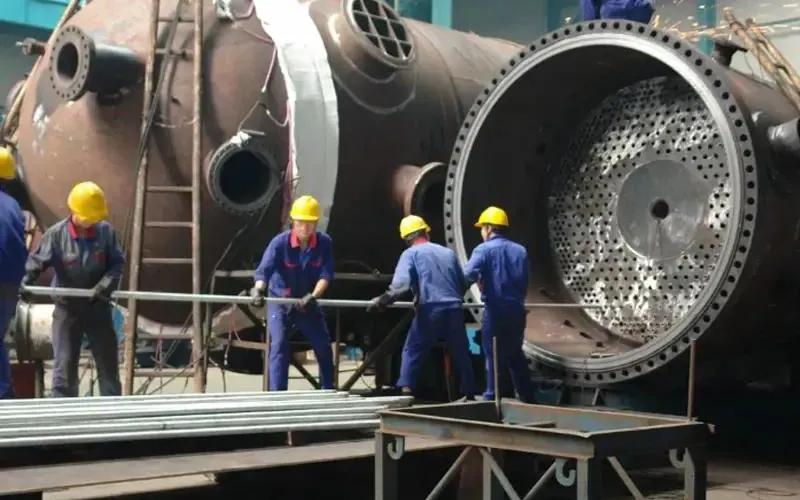
Large fabrications, capital equipment and engineered-to-order projects.
Functional departments

Machine builders, equipment makers and industrial systems.
Functional departments

Electrical equipment, control systems and electronics production.
Functional departments

Plant-level operations, shift management and manufacturing excellence.
Functional departments
No listed position matches. We also recruit for roles not shown here.
Enquire about a custom roleWe map the role, department and seniority.
Targeted search across the relevant segment.
Screened candidates matched to your brief.
Interview coordination and offer support.
Explore other sectors we recruit for.
Tell us the position and we will take it from there.
Send a Hiring Enquiry ← All Industries
Plant, process, R&D, technical sales and compliance hiring for chemical and industrial materials companies.
We recruit for chemical, specialty chemical and industrial materials businesses across production, process engineering, R&D, quality, EHS, regulatory compliance, technical and export sales. Coverage includes chemists and plant engineers through to plant heads and business leaders.
Choose a business segment, then filter by department, seniority or job title. These positions show our recruitment coverage and are not current job openings.

Performance and fine chemicals made to customer specifications.
Functional departments

Bulk and intermediate chemicals for industrial users.
Functional departments

Hydrocarbon-based feedstocks, intermediates and derivatives.
Functional departments

Plastics, polymers, resins and compounding.
Functional departments

Lubricant blending, base oils and performance additives.
Functional departments

Decorative and industrial coatings, adhesives and materials.
Functional departments
No listed position matches. We also recruit for roles not shown here.
Enquire about a custom roleWe map the role, department and seniority.
Targeted search across the relevant segment.
Screened candidates matched to your brief.
Interview coordination and offer support.
Explore other sectors we recruit for.
Tell us the position and we will take it from there.
Send a Hiring Enquiry ← All Industries
Manufacturing, quality, regulatory and R&D hiring for API, formulation and biotechnology organisations.
We recruit for pharmaceutical and biotechnology organisations across API and formulation manufacturing, quality, validation, regulatory affairs, development and technical operations. Coverage runs from chemists and analysts to site heads and business leaders.
Choose a business segment, then filter by department, seniority or job title. These positions show our recruitment coverage and are not current job openings.

Bulk drug and intermediate manufacturing.
Functional departments

Oral solids, injectables and finished dosage forms.
Functional departments

Biologics, biosimilars and bioprocess operations.
Functional departments

Plant, engineering and site operations.
Functional departments

Analytical, formulation and process development.
Functional departments

Quality systems, validation and regulatory affairs.
Functional departments
No listed position matches. We also recruit for roles not shown here.
Enquire about a custom roleWe map the role, department and seniority.
Targeted search across the relevant segment.
Screened candidates matched to your brief.
Interview coordination and offer support.
Explore other sectors we recruit for.
 ← All Industries
Software, cloud, data, security and enterprise applications hiring for IT services and technology businesses.
We recruit for IT services firms, product companies and technology teams across engineering, DevOps, cloud, cybersecurity, data, product and enterprise applications. Coverage runs from graduate engineers to architects, delivery heads and technology leaders.
Choose a business segment, then filter by department, seniority or job title. These positions show our recruitment coverage and are not current job openings.

Product and application engineering teams.
Functional departments

Delivery, consulting and managed services.
Functional departments

Cloud platforms, networks and infrastructure operations.
Functional departments

Security operations, engineering and governance.
Functional departments

Data platforms, analytics, machine learning and AI.
Functional departments

ERP, CRM and business application implementation.
Functional departments
No listed position matches. We also recruit for roles not shown here.
Enquire about a custom roleWe map the role, department and seniority.
Targeted search across the relevant segment.
Screened candidates matched to your brief.
Interview coordination and offer support.
Explore other sectors we recruit for.
 ← All Industries
Engineering, manufacturing, quality, EV and sourcing hiring for OEMs and component makers.
We recruit for vehicle manufacturers, component suppliers and automotive technology businesses across production, design, quality, tooling, EV and battery engineering, sourcing and plant leadership. Coverage runs from graduate engineers to plant heads and business unit leaders.
Choose a business segment, then filter by department, seniority or job title. These positions show our recruitment coverage and are not current job openings.

Vehicle manufacturers and assembly operations.
Functional departments

Systems and component suppliers to OEMs.
Functional departments

EV, battery and charging technology.
Functional departments

Embedded systems, sensors and vehicle electronics.
Functional departments

Machined, forged and cast precision parts.
Functional departments

Engineering services and manufacturing operations.
Functional departments
No listed position matches. We also recruit for roles not shown here.
Enquire about a custom roleWe map the role, department and seniority.
Targeted search across the relevant segment.
Screened candidates matched to your brief.
Interview coordination and offer support.
Explore other sectors we recruit for.
Tell us the position and we will take it from there.
Send a Hiring Enquiry ← All Industries
Sales, marketing, retail operations, supply chain and manufacturing hiring for FMCG and retail businesses.
We recruit for FMCG manufacturers, consumer brands and retailers across sales, marketing, category and brand management, modern and general trade, retail operations, production, supply chain and corporate functions. Coverage runs from management trainees to national heads and business leaders.
Choose a business segment, then filter by department, seniority or job title. These positions show our recruitment coverage and are not current job openings.

Packaged food, beverages and dairy.
Functional departments

Beauty, hygiene and home care brands.
Functional departments

Durable and non-durable consumer goods.
Functional departments

Consumer goods production and packing operations.
Functional departments

Retail chains, stores and key accounts.
Functional departments

Field sales, distributor and route-to-market teams.
Functional departments
No listed position matches. We also recruit for roles not shown here.
Enquire about a custom roleWe map the role, department and seniority.
Targeted search across the relevant segment.
Screened candidates matched to your brief.
Interview coordination and offer support.
Explore other sectors we recruit for.
 ← All Industries
Project, site, planning, contracts and HSE hiring for construction, infrastructure and EPC organisations.
We recruit for construction companies, infrastructure developers, EPC contractors and real estate developers across civil and structural engineering, project management, planning, billing, contracts, tendering, MEP, quality, HSE and project leadership. Coverage runs from site engineers to project directors.
Choose a business segment, then filter by department, seniority or job title. These positions show our recruitment coverage and are not current job openings.

Buildings, roads, bridges and civil works.
Functional departments

Public infrastructure and development projects.
Functional departments

Engineering, procurement and construction contracts.
Functional departments

Plants, factories and industrial facilities.
Functional departments

Residential and commercial development.
Functional departments

Power plants, utilities and industrial projects.
Functional departments
No listed position matches. We also recruit for roles not shown here.
Enquire about a custom roleWe map the role, department and seniority.
Targeted search across the relevant segment.
Screened candidates matched to your brief.
Interview coordination and offer support.
Explore other sectors we recruit for.
Tell us the position and we will take it from there.
Send a Hiring Enquiry ← All Industries
Specialised recruitment across professional services, hospitality, education, renewable energy and business services.
Beyond our core sectors, we recruit across professional services, hospitality, education and training, renewable energy and business services. Positions below are organised by business segment and functional department.
Choose a business segment, then filter by department, seniority or job title. These positions show our recruitment coverage and are not current job openings.

Consulting, legal, audit and advisory firms.
Functional departments

Hotels, restaurants and hospitality operations.
Functional departments

Institutions, training providers and L&D teams.
Functional departments

Solar, wind and clean energy projects and operations.
Functional departments

Shared services, BPO and corporate support functions.
Functional departments

Healthcare administration and specialised operations.
Functional departments
No listed position matches. We also recruit for roles not shown here.
Enquire about a custom roleWe map the role, department and seniority.
Targeted search across the relevant segment.
Screened candidates matched to your brief.
Interview coordination and offer support.
Explore other sectors we recruit for.
Tell us the position and we will take it from there.
Send a Hiring EnquiryOur expertise
Each service starts from a different business need, from one critical leadership appointment to payroll for an entire workforce.
Confidential search for CEO, CXO, director and business-head roles.
Full-time hiring for specialist and managerial roles that last.
A dedicated recruitment process for ongoing or volume hiring.
Skilled staff for projects, seasonal peaks and interim gaps.
Salary processing with PF, ESI, TDS and labour-law compliance.
Tech hiring plus managed IT, cloud and cybersecurity support.
Industry understanding
Every sector has its own roles, credentials, terminology and talent market. Our experience across nine industries helps us brief accurately, search in the right places and assess candidates in context.









Our difference
This is what organisations can expect from us from the first briefing onwards.
Before searching, we discuss the role's context: team structure, reporting lines, growth plans and what success looks like after the first year.
Experience across nine sectors means we understand the technical requirements and can assess candidates in the language of your industry.
A candidate network built since 2007 across functions, levels and locations, including people who are not actively applying.
Growing companies, established manufacturers and multi-location businesses hire differently. We adapt the process to your needs.
We screen for capability, experience and fit, so you spend interview time on candidates who are relevant.
Clear updates, organised interview schedules and consistent feedback, for your team and for every candidate who represents your brand.
Many organisations come back to us as their teams grow. We work to earn that through each assignment.
Recruitment solutions and talent acquisition built around your roles, your industry and your timelines.
Explore career opportunities with established employers across the industries we serve.
For candidates
Register with YOOTOHUNT CAREER SOURCE to be considered for roles with employers across India, and use our interview guide to walk in prepared and confident.
Get started
How it works
Share your updated resume and contact details.
Our consultants review your experience, skills and preferences.
Your profile may be considered for suitable job openings.
Where shortlisted, we coordinate the interview process with the employer.
We provide relevant updates on your application where available.
Registration does not guarantee an interview or employment.
Interview guide
Twenty-five common interview questions, with practical advice from our recruitment team. Search or pick a topic.
Start with your name, education and a short summary of your experience. Focus on professional highlights relevant to the role, and end with a line showing your interest in the opportunity.
Structure it as Present → Past → Future: your current role and skills, then your experience and achievements, then career goals that match the role. Keep it under two minutes and relevant to the job.
Arrive early, dress appropriately, smile and greet the panel confidently. Good eye contact, upright posture and a thank-you set a positive tone.
Sit upright, keep gestures calm, make eye contact and avoid fidgeting. Body language often says as much as your words.
Mention two or three strengths backed by examples. Choose strengths that matter for the job, such as problem-solving, adaptability or leadership.
Pick a minor weakness that doesn’t affect the job, then show how you are improving it. For example: “I used to find it hard to delegate, but I have learned to trust my team more.”
Connect your skills, achievements and motivation to what the role needs. For example: “My experience automating team workflows directly supports your upcoming digital projects.”
Say you are open to a fair offer based on market standards and your skills, or share a researched range confidently while showing some flexibility.
Focus on growth, learning and better alignment with your career goals. Avoid negative comments about past employers.
Be honest and confident. Explain what you did during the gap, such as upskilling, freelancing, volunteering or personal commitments, and how it added to your profile.
Explain the problem the project solved, your specific role, the tools or technologies used, and the measurable results or lessons learned.
State them as facts, with numbers where possible. For example: “I led a team of five and improved efficiency by 20% through workflow changes.”
Be well prepared, genuine and clear. Share specific results or insights that show the impact you made in past roles.
Share examples of when you motivated, guided or supported others. Leadership is about influence and responsibility, not just a job title.
Review the fundamentals, practise problem-solving on platforms such as LeetCode or HackerRank, and revisit your past projects. Focus on clear thinking, not just the right answer.
Communication, ownership, teamwork, willingness to learn and cultural fit. These matter as much as technical skills for long-term success.
Stay calm. Say you’re not sure, then explain how you would find the answer or think through the problem. This shows honesty and analytical thinking.
Use the STAR method: Situation, Task, Action, Result. Be specific and highlight how you solved the problem and what you learned.
Read about the company’s culture, mission and values. Prepare answers that show stability, adaptability and long-term commitment.
Address every panel member, share eye contact evenly and stay composed. Treat each question as a chance to show clarity and collaboration.
Ask about the team’s goals, upcoming projects or how success is measured in the role. It shows interest, research and initiative.
Practise deep breathing, picture the interview going well, and remember it is a two-way conversation, not a test.
Send a thank-you email within 24 hours. Express appreciation, confirm your interest and briefly restate how you can add value.
Acknowledge it calmly, correct it and move on. How you recover often matters more than the mistake itself.
End with thanks and confirm your interest: “Thank you for your time. I’m excited about this role and confident I can contribute.”
No questions match your search. Try another word, or ask our team.
Quick checklist
Registration FAQs
Register by submitting your CV through our candidate registration form, or email it to cv@yootohunt.com.
No. Registration does not guarantee an interview or employment. Your profile may be considered for suitable job openings, and shortlisted candidates are coordinated with the employer.
No. Registering with YOOTOHUNT CAREER SOURCE is completely free. We never charge candidates any fee for registration, interviews or placement.
Where your profile is considered for a suitable opening, our consultants contact you using the email address or mobile number you provided.
Yes. You can apply for more than one opening that matches your experience. Our consultants will consider your profile for each suitable role.
Answer pending confirmation from YOOTOHUNT CAREER SOURCE.
You can share an updated CV through the candidate registration form or by emailing cv@yootohunt.com.
Submit your CV through our registration form, or email it to cv@yootohunt.com.
Recruitment, HR and career insights.

Start a conversation
Whether it is one leadership appointment, a growing team or ongoing workforce support, a short discussion is the best place to start. Share your requirements and our team will get back to you.
Or email us at info@yootohunt.com
Contact us
Employers and job seekers are both welcome. Reach the right team directly, or send us a message and we’ll get back to you.
Find the right route
Tell us who you are and what you need.
Quick answers
We review every enquiry and respond during business hours, Monday to Friday, 10:00am to 6:00pm IST.
Share the role, number of positions, location, experience range and timeline. You can also use our detailed hiring enquiry form.
Use the CV submission form or email it to cv@yootohunt.com. You can also browse current openings.
No. Registration does not guarantee an interview or employment, but your profile may be considered for suitable openings.
Executive Search
At YOOTOHUNT CAREER SOURCE, our executive search identifies, approaches and recruits senior leaders, such as CEOs, directors and vice presidents, who bring vision, expertise and integrity to your organisation.
The basics
Executive search, also called headhunting, is not traditional recruitment. It is a research-driven process that reaches experienced leaders who are often not looking for a new role.
It relies on market mapping, industry knowledge and a personal approach to find leaders who fit your goals, values and culture.
Roles we recruit
Our method
A six-step process built for precision and confidentiality.
We work with your leadership team to define the role, business objectives and cultural expectations.
We map available leadership talent across relevant industries and locations.
We contact potential candidates confidentially and professionally.
Structured interviews, leadership assessment and reference checks, where agreed.
We present only the strongest candidates and support you through interviews and negotiation.
We stay in touch after placement to support a smooth transition.
Why it matters
A senior appointment is a strategic investment. One decision can change your organisation’s direction, performance and culture.
A professional executive search reduces hiring risk, widens your access to proven leaders, and brings in people who can drive growth and change.
Why YOOTOHUNT CAREER SOURCE
Useful tips
Define success, not just the titleAgree what the leader must achieve in the first 12–18 months.
Agree the decision panel earlyKnow who interviews and who signs off to avoid delays.
Be clear on compensationSet a realistic range, including variable pay and benefits.
Plan for confidentialityDecide who internally knows about the search, especially for replacement hires.
Where we work
We run executive searches for organisations in metro cities, emerging business hubs and industrial regions.
Need other support?
Tell us about the role, location and experience you need. We’ll discuss the search approach with you in confidence.
Permanent Recruitment
At YOOTOHUNT CAREER SOURCE, we help organisations hire full-time professionals who fit your goals and culture, and who become long-term contributors to growth and stability.

The basics
Permanent recruitment is hiring full-time employees who join your organisation for the long term. Unlike temporary staffing, these people are not just filling a seat.
They receive full company benefits, invest in your vision and often grow into the people who drive productivity, innovation and culture.
Roles we recruit
Our method
A thorough, structured process tailored to your organisation.
We define role objectives, skill requirements and the cultural fit your organisation needs.
Research, databases and networking to reach both active and passive candidates.
Beyond qualifications, we check career goals, stability, culture fit and growth potential.
We coordinate interviews and give you structured feedback to support your decision.
We help structure the offer, negotiate salary and plan a smooth joining.
We stay in touch to make sure the new hire settles in well.
Why it matters
Good permanent hires keep knowledge in the business and strengthen your culture.
Why YOOTOHUNT CAREER SOURCE
Useful tips
Write the job, not a wish listSeparate must-have skills from nice-to-have ones so good candidates aren’t screened out.
Benchmark the salary firstA competitive, clear CTC range avoids last-minute offer declines.
Move quickly between roundsStrong candidates often hold several offers; keep feedback within 2–3 days.
Plan the notice periodMany Indian roles carry 30–90 days’ notice, so start early and stay in touch until joining.
Where we work
We recruit for organisations in metro cities and emerging business hubs, so you can reach strong talent wherever you are based.
Need other support?
Tell us the role, location and experience you need. We’ll discuss the hiring brief and the right search approach with you.
Temporary Recruitment
At YOOTOHUNT CAREER SOURCE, we provide flexible, skilled professionals for short-term assignments, so seasonal peaks, projects and sudden workforce gaps never slow your operations.
The basics
Temporary recruitment means hiring people for a fixed period to meet a specific need, such as covering absent staff, handling extra workload or finishing a time-bound project.
Assignments can last from a few days to several months. You scale your workforce up or down without the long-term commitment of a permanent hire.
Roles we provide
Our method
A quick but careful process, so speed never costs you quality.
We agree the scope, duration, skills needed and expected outcomes with you.
We use our network and databases to find people who match your needs quickly.
Interviews, skills checks and references, so every person meets your standards.
We handle joining formalities so staff settle into your team without delay.
We stay in regular contact and act fast on any concern or replacement.
Extend the assignment, end it on schedule, or move a strong performer to a permanent role.
Why it matters
Flexible staffing helps you respond to change without adding fixed cost.
Why YOOTOHUNT CAREER SOURCE
Useful tips
Plan peaks in advanceShare festive or seasonal forecasts 3–4 weeks early so we can line up people in time.
Be clear on duration and hoursFixed start and end dates, shifts and overtime rules avoid confusion and attrition.
Give a short inductionA one-day briefing on safety, tools and reporting makes temps productive faster.
Check compliance coverMake sure PF, ESI and contract-labour requirements are handled; we take care of this for you.
Where we work
We provide temporary staff for organisations in metro cities, emerging business hubs and industrial regions.
Need other support?
Tell us the roles, numbers, location and duration you need. We’ll get skilled people in place quickly.
RPO Services
With Recruitment Process Outsourcing (RPO) from YOOTOHUNT CAREER SOURCE, we manage all or part of your hiring through a dedicated process, so you can hire at scale with consistent quality and clear reporting.
The basics
In Recruitment Process Outsourcing, you hand over all or part of your recruitment to an external partner who works as an extension of your HR team.
Unlike hiring one role at a time through an agency, RPO is a continuing engagement, set up around your hiring volume, timelines and requirements.
Engagement options
The scope of each engagement depends on what we agree with you. Not every engagement includes every component.
What it can include
Our method
A clear set-up, so both sides know what is delivered and how it is measured.
We discuss your hiring volume, roles, locations and timelines.
We agree which stages we manage and how success will be measured.
We align job briefs, screening criteria and interview flow with your team.
Sourcing, screening and interview coordination are carried out as agreed.
You receive regular updates on positions, pipeline and joinings.
We review results with you and adjust the process as needs change.
Why it matters
RPO gives you the capacity of a full recruitment team without building one in-house.
Is RPO right for you?
Useful tips
Share a 3–6 month hiring planForecasted roles and numbers let us build pipelines before demand peaks.
Agree measures up frontDecide on time-to-fill, offer-to-joining ratio and quality checks at the start.
Name one point of contactA single HR coordinator speeds up approvals and feedback.
Review results monthlyA short monthly review keeps the process on track as priorities change.
Where we work
We run RPO engagements for organisations in metro cities, emerging business hubs and industrial regions.
Need other support?
Tell us your roles, numbers, locations and timelines. We’ll propose an RPO model that fits your hiring plan.
Payroll & Statutory Compliance
YOOTOHUNT CAREER SOURCE manages your payroll and statutory obligations under Indian labour law, from salary processing to PF, ESI and TDS filings, with precision and confidentiality.
The basics
Payroll is calculating and paying salaries correctly every month. Statutory compliance is meeting the legal duties that come with employing people in India, such as PF, ESI, professional tax, TDS and labour-law records.
Mistakes can lead to interest, penalties and unhappy employees. Outsourcing both to a specialist keeps salaries accurate and filings on time.
What we handle
The exact scope depends on what we agree with you.
Compliance calendar
The usual deadlines we plan payroll around. Dates can change by notification, so we track the latest rules.
| Obligation | Usual due date | What it covers |
|---|---|---|
| Provident Fund (PF) | 15th of next month | Employer and employee contributions with the ECR return |
| Employees’ State Insurance (ESI) | 15th of next month | Contributions for eligible employees |
| TDS deposit on salaries | 7th of next month | Tax deducted from salaries (30 April for March) |
| TDS return (Form 24Q) | Quarterly | Return of salary TDS for the quarter |
| Form 16 to employees | By 15 June | Annual TDS certificate for each employee |
| Professional Tax & LWF | As per state rules | Deductions and payments that vary by state |
This calendar is a general guide, not legal or tax advice. Your exact obligations depend on your business, state and workforce.
Our method
A fixed monthly cycle, so everyone knows what happens and when.
We review your employees, pay structures, locations and current compliance status.
We configure salary components, deductions and statutory contributions under applicable law.
You share attendance, leave, joiners, exits and changes by an agreed date.
We calculate salaries and share a register for your approval before payment.
We issue payslips and complete PF, ESI, TDS and other filings on time.
You receive monthly reports, and we answer employee queries and support audits.
Why it matters
Free your team from monthly calculations and compliance worries.
Why YOOTOHUNT CAREER SOURCE
Useful tips
Fix a monthly input cut-offShare attendance and changes by the same date each month, such as the 25th.
Keep employee records completePAN, Aadhaar, UAN and bank details avoid failed payments and filing errors.
Collect tax declarations earlyAsk for investment proofs in January so year-end TDS doesn’t surprise employees.
Settle exits on timePlan full-and-final settlements promptly to stay compliant and keep goodwill.
Where we work
We manage payroll for single-site and multi-state businesses, including state-specific rules such as professional tax and labour welfare fund.
Need other support?
Tell us your headcount, locations and current setup. We’ll suggest a payroll and compliance plan that fits.
IT Recruitment & IT Services
YOOTOHUNT CAREER SOURCE helps businesses hire skilled technology professionals and supports their IT needs, from managed IT and cloud to cybersecurity and consulting.
Two ways we help
These are separate services. Use one, or combine both.
Talent acquisition for technology roles and teams, from developers to IT leaders. We source, screen and support you through interviews and offers.
Technology services that support and manage your business IT. Please contact us to confirm availability for your requirement.
IT recruitment
Our method
Technical roles need technical screening. Our process checks skills, not just keywords.
We confirm languages, tools, platforms and experience level with your tech lead.
We reach active and passive candidates through networks, databases and referrals.
We check hands-on experience and project work against your stack.
We schedule technical and HR rounds and share quick feedback.
We help with salary benchmarks, offers and notice-period follow-up.
We check in to make sure the new hire settles in well.
IT services
Availability depends on your requirement. Contact us to confirm scope.
How IT services work
We start with your business goals, challenges and existing IT setup.
A tailored IT plan is designed around your goals and budget.
Solutions are deployed with minimal disruption to operations.
Ongoing support resolves issues and improves performance.
Why YOOTOHUNT CAREER SOURCE
Useful tips
List must-have skills separatelyName the 3–4 essential technologies; treat the rest as a bonus.
Keep the process shortTwo or three rounds within a week stops good developers taking other offers.
Use a practical testA short, relevant task says more than a long theory interview.
Be open about work modeState remote, hybrid or office upfront, as it strongly affects tech applicants.
Where we work
We hire tech talent for organisations in India’s main IT hubs and beyond, for office, hybrid and remote roles.
Need other support?
Tell us the roles, tech stack or IT need you have. We’ll discuss the right approach with you.
YOOTOHUNT CAREER SOURCE is a recruitment consultancy and talent acquisition firm in India, established in 2007. You can contact us at info@yootohunt.com.
We collect the details you give us through the enquiry form or by email: your name, email address, phone number, company name, the service or role you are interested in, your message, and any CV you send to cv@yootohunt.com.
We do not publish CVs or personal information on this website.
To ask about, correct or delete the information we hold about you, email info@yootohunt.com.
We may update this policy from time to time. The current version is always published on this page.
The information on this website is provided for general information about the services of YOOTOHUNT CAREER SOURCE. You agree to use the website lawfully and not to misuse it.
An enquiry, an application or a CV submission does not create an employment relationship or a service contract, and does not guarantee a placement or an engagement.
We aim to keep the website accurate and up to date. Content, services and job information may change without notice.
This website may link to other websites. We are not responsible for their content or practices.
The content, name and logo of YOOTOHUNT CAREER SOURCE may not be copied or reproduced without our written permission.
Questions about these terms can be sent to info@yootohunt.com.
This form is for candidate registration. All fields are required. Accepted resume formats: PDF, DOC or DOCX, up to 5 MB. For general questions, please use our Contact page.
Current openings
Browse vacancies we are recruiting for on behalf of our clients. Can’t find the right role? Register your CV and we’ll consider you for suitable openings.
We add new roles regularly. Register your CV and our consultants will contact you when a suitable opening comes up.
How to apply
Register your CV once and our consultants will consider you for suitable openings across nine industries. Read our interview guide while you wait.
Insights
Practical articles from the YOOTOHUNT CAREER SOURCE team for employers building strong teams and professionals growing their careers.
Please choose another category.
Browse by topic
Take the next step
Tell us the role, location and experience you need, and we’ll discuss the hiring brief with you.
Send a Hiring EnquiryRegister your CV with our consultants and read our interview guide before your next interview.

Every New Year, millions of people set ambitious goals, and many abandon them over the following months. John Norcross, a psychologist at the University of Scranton who has studied New Year’s resolutions for years, has said that about 75% of resolvers are still succeeding after one week, falling gradually to around 40 to 46% at six months (NPR, Science Friday, 2012).
The problem often lies less with the person than with the process.
Setting goals is an art form that blends psychology, strategy, and self-awareness. The key isn’t just setting them but sticking to them — aligning your goals with your deeper values and daily actions.
Achieving something feels rewarding, and that reward can motivate you to keep going. It works best when your goals are clear and measurable, because you can see your progress.
Vague goals such as “get fit” or “be successful” are hard to act on. A specific goal, such as “work out for 30 minutes every morning”, gives you a clear plan to follow.
The SMART framework is a widely used way to turn wishful thinking into structured goals.
Avoid broad goals. Instead of “I want to save money”, say “I will save ₹10,000 per month”.
Numbers make progress visible. Use apps or journals to track every milestone.
Stretch yourself, but stay grounded. Unrealistic goals breed disappointment.
If your goal doesn’t resonate emotionally, it won’t last. Align goals with your “why.”
Deadlines turn intentions into commitments. Add urgency with time frames such as “by the end of June”.
Writing your goals down regularly keeps them in front of you and helps you prioritise them.
Spend a few minutes each day imagining yourself achieving the goal. Visualisation can help you stay motivated and prepared.
Divide large goals into weekly or daily micro-actions. Small wins create momentum.
Focus on habits — if your goal is to run a marathon, your system is daily training.
Use a planner or digital tracker. Adjust strategies, not the vision.
Find a coach, mentor, or friend who keeps you on track.
Every small win deserves recognition. It reinforces consistency.
Unrealistic expectations – Setting too many goals at once leads to burnout.
Lack of tracking systems – What gets measured, gets managed.
Neglecting emotional motivation – If your “why” is weak, your discipline will fade.
Tony Robbins emphasises emotional intensity in achieving goals.
Ordinary people who save for homes, improve their health or build businesses through small, consistent actions show that steady progress comes from daily effort.
Try Todoist, Habitica, or Notion to manage progress digitally.
Prefer pen and paper? Use a structured goal journal or habit tracker notebook.
Q1: How many goals should I set at once?
A: Many people find it easier to focus on a small number at a time, for example three to five, for clarity and balance.
Q2: How do I stay motivated when progress slows?
A: Revisit your “why” and adjust your plan, not your goal.
Q3: What if I fail to meet a goal?
A: Reflect, refine, and restart. Failure is feedback.
Q4: How can I make long-term goals feel achievable?
A: Break them into smaller phases with mini-deadlines.
Q5: What’s the best time to review my goals?
A: A short weekly review works well for many people, with a fuller review every few months.
Goal setting isn’t about perfection. It’s about progress. When you align your goals with your values, create systems and celebrate every step, you give yourself a much better chance of success.
Start small, dream big, and remember — goals that stick come from consistency, not intensity.